
Scale deposits
White or chalky deposits may appear around taps, shower fittings and sinks.
Hard water can be frustrating in everyday household use, particularly when mineral deposits build up around taps, showers and appliances. A hard water filtration system can form part of a broader water treatment setup, but it is important to understand the difference between filtration and water softening before choosing a solution.
Water filtration and water softening address different water quality concerns. Filtration can target substances such as sediment, chlorine, taste and odour, while a softener is designed specifically around hardness minerals. Choosing between these approaches depends on the characteristics of your water supply and what you want the system to achieve.
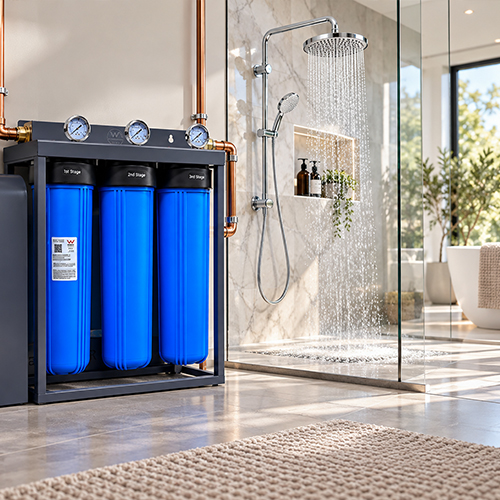
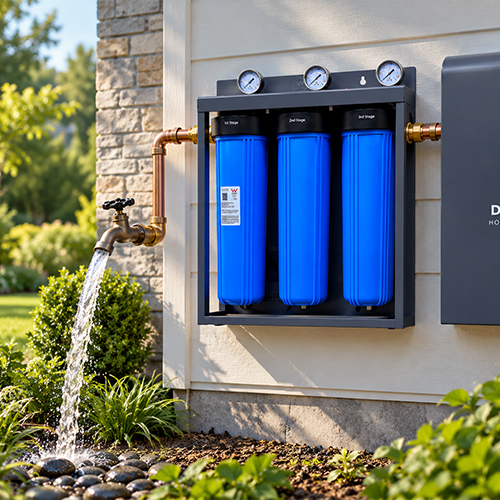
Hard water contains dissolved minerals, primarily calcium and magnesium. These minerals can contribute to scale or deposits on fixtures and appliances and may affect how soap and cleaning products perform.
Hardness is different from sediment or chlorine. A standard filtration system may address certain contaminants and improve taste and odour without removing the minerals responsible for water hardness. This distinction is important when selecting a treatment system.
White or chalky deposits may appear around taps, shower fittings and sinks.
Hard water can make soap and cleaning products more difficult to rinse away.
Mineral deposits can accumulate inside appliances that regularly use water.
Some people notice a different feel on their skin after washing with hard water.
Glassware and fixtures may develop mineral marks after water dries.
A water filter and a softener are not interchangeable. A filtration system is generally used to reduce particular substances from water, while a softener is specifically designed to address hardness.
If your main concern is mineral hardness, a water softener for hard water may be more appropriate than relying on a conventional filter alone. If you are also concerned about sediment, chlorine, taste or odour, filtration may address those separate water quality concerns.
Water treatment | Main purpose | Typical focus |
Water filtration | Reduce selected substances | Sediment, chlorine, taste and odour |
Water softening | Address water hardness | Calcium and magnesium |
Combined setup | Address different concerns | Softening and filtration |
Some households use more than one treatment stage to address different water quality requirements. A water filter for softened water can be considered when softened water still needs additional filtration for substances such as sediment, chlorine or compounds affecting taste and odour.
The right combination depends on the incoming water and the purpose of each system. Testing or understanding your water quality first can help prevent choosing equipment that does not address the issue you are actually experiencing.
A water softener system for home setup is designed around household water hardness rather than general filtration. The appropriate system depends on factors such as the hardness of the incoming supply, household water use and available installation space.
For households dealing with multiple water quality concerns, a combined water filter and water softener setup may provide separate treatment stages for different purposes. The filtration and softening components should still be selected according to their individual functions.
Understand the hardness level of your incoming supply.
Consider how much water your household uses each day.
Check the available area around the incoming water connection.
Identify whether sediment, chlorine, taste or odour also need attention.
Consider filter replacement and any servicing required by the selected system.
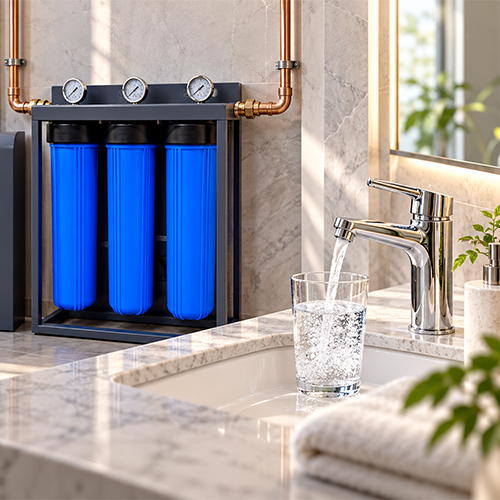
Whole-home filtration takes place at the point where water enters the property, allowing treated water to reach multiple household outlets. This can be useful for households looking beyond filtration at a single kitchen tap.
However, water filtration hard water should not automatically be interpreted as water softening. A filtration system needs to be suitable for the substances you want to address, while hardness treatment requires equipment specifically designed for that purpose.
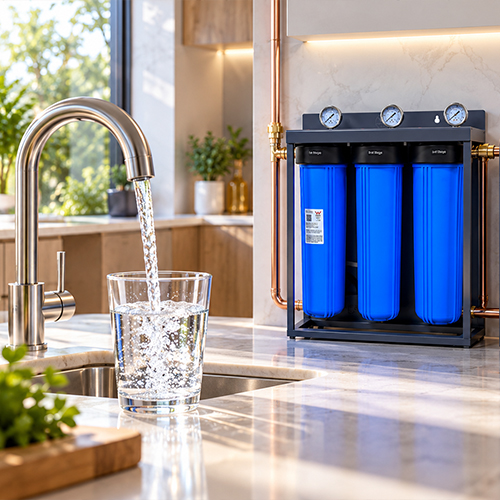
The answer depends on the filtration technology being used. Conventional sediment and carbon filtration are not the same as a dedicated softening process, so they should not be treated as interchangeable solutions for hardness.
If scale and mineral deposits are the main concern, assess the water hardness before selecting equipment. If chlorine, sediment, taste or odour are also concerns, filtration can be considered alongside appropriate hardness treatment.
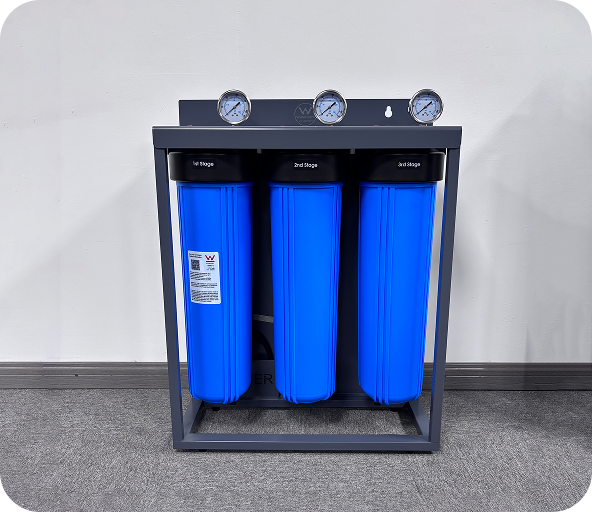
Distillo’s whole-home system is designed for point-of-entry filtration, providing filtered water across multiple household outlets. The system is designed to help reduce sediment, chlorine, unpleasant taste and odour, along with certain organic compounds and chemicals.
A hard water filter system should be selected according to the specific water quality issue you want to address. Distillo’s filtration system and its separate five-stage RO system serve different purposes, so understanding those differences can help you choose a suitable approach.
Choosing the right hard water filtration system starts with understanding the difference between filtration and softening. Distillo can help you explore its whole-home and RO filtration options and understand which type of filtration is suited to your household requirements.
For more information about Distillo’s filtration systems, contact 1300 541 644 or email sales@distillo.com.au
Everything you need to know about bringing whole home filtration to your Melbourne home.
It depends on the filtration technology. A hard water filtration system should not automatically be considered a replacement for dedicated water softening. Conventional filtration and softening address different water quality concerns, so the system should be selected based on the minerals or substances present in the water.
Yes, different treatment stages can serve different purposes. A water filter for softened water may be used to address filtration needs that remain after softening, such as sediment, chlorine, taste or odour, depending on the selected filtration technology.
That depends on your water quality and the purpose of your existing filter. A water softener for hard water is specifically designed to address hardness, while filtration may target other substances. If scale is your main concern, it is worth assessing the hardness of your water.
A whole-home filtration setup can provide filtration across multiple outlets, but filtration and softening are different processes. Water filtration hard water solutions should therefore be assessed according to the specific technology being used and the water quality issue you want to address.
The suitability of water softener systems for home use depends on the household’s water hardness, usage, available installation space and maintenance requirements. Assessing the incoming water first can help determine whether softening is appropriate for your property.
Yes, they can serve separate roles within a household water treatment setup. A water filter and water softener combination can address different water quality concerns, provided each component is selected for the specific purpose it is intended to perform.
Start by identifying what is actually present in your water and what you want the system to address. A hard water filter system may be suitable for certain filtration requirements, while dedicated softening equipment may be needed when mineral hardness is the primary concern.