

Sediment filter
Helps capture suspended particles before water reaches the carbon stages and RO membrane.
Your reverse osmosis system is designed to provide a dedicated source of filtered drinking and cooking water, but the cartridges inside it need regular attention. Reverse osmosis system replacement filters help keep the different stages of filtration working as intended, while routine replacement also gives you an opportunity to check the system and its connections.
Distillo’s five-stage RO system uses sediment, GAC carbon, CTO carbon, an RO membrane and post-carbon or mineral filtration. The standard RO membrane has a capacity of 50 GPD, with 75 GPD and 100 GPD options also available.

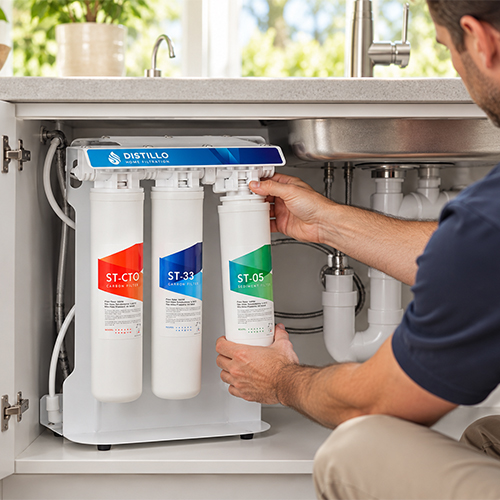
Filter cartridges gradually collect the substances they are designed to reduce. As they become loaded, water flow can change and the system may not perform as expected. Regular maintenance keeps the filtration stages working together rather than leaving an older cartridge in place for too long.
The right replacement schedule depends on the filter type, water quality and household usage. Manufacturer guidance should always take priority, particularly for components such as the RO membrane. Competitor servicing guidance similarly recommends routine replacement and professional attention for more technical RO components.
Helps capture suspended particles before water reaches the carbon stages and RO membrane.
Uses granular activated carbon as part of the pre-filtration process.
Provides another carbon filtration stage before the RO membrane.
Provides the system's reverse osmosis filtration stage.
Provides the final filtration stage before the treated water reaches the tap.
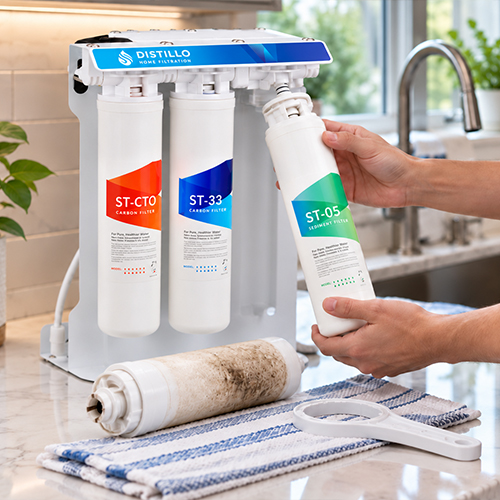
There is no single replacement interval that suits every household. Usage, incoming water quality and the specific cartridge all affect how long a filter remains suitable for use.
A noticeable change in water flow, taste or odour can indicate that the system needs attention. These signs do not necessarily identify which component needs replacing, so checking the system and following the relevant maintenance instructions is important. Regular servicing can also help identify worn components before they become a larger issue.
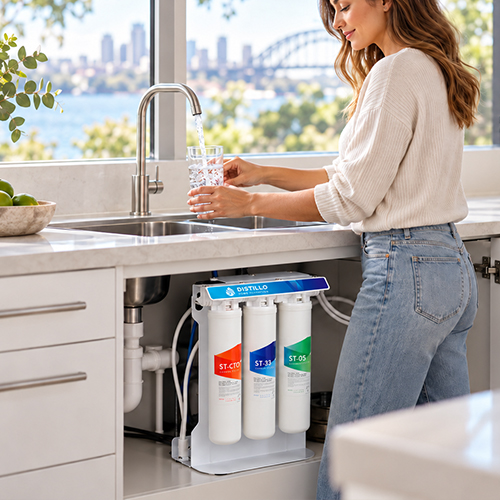
Using the correct cartridges is important for maintaining compatibility with your RO system. Filter dimensions, connection type and the filtration stage all need to match the existing setup.
When arranging reverse osmosis water filters replacement, check the model of your system and identify the cartridges currently installed. Replacing filters with incompatible components can create installation problems and may affect how the system operates.
Knowing what to look for can make routine maintenance easier. A system does not always stop working completely when a cartridge reaches the end of its useful service period.
A RO water filter replacement may be worth considering when you notice slower flow from the filtered tap, a change in taste or odour, or a noticeable difference in the system’s usual operation. These signs can have other causes as well, so inspection is useful before replacing components.
Changing a cartridge can be straightforward on some systems, but RO systems also contain components that require greater care. The membrane, connections, seals and other parts should be checked when servicing the system.
For reverse osmosis water filter replacement, professional servicing can be useful when you are unsure which cartridge needs changing or when the system is showing an issue beyond routine filter maintenance. Competitor service guidance also distinguishes simple cartridge changes from more technical RO components that may require professional attention.
Keeping your RO system maintained is easier when you know exactly what each filtration stage does and which component needs attention. Distillo’s system has a defined five-stage configuration, making it possible to identify replacement requirements according to the system’s design.
Routine maintenance is about more than replacing cartridges when something feels different. Keeping a record of filter changes can make it easier to stay on top of servicing and identify changes in system performance.
With reverse osmosis replacement filters, it is useful to note the date each cartridge was installed and follow the applicable product guidance. The RO membrane may have a different replacement interval from the pre-filters and post-filter, so treating every component as having the same service life is not recommended.
The right replacement approach starts with identifying your Distillo system and understanding which filtration stage requires attention. Reverse osmosis filters replacement should follow the relevant product specifications rather than relying on a generic cartridge simply because it looks similar.
For RO system replacement filters, Distillo can help you understand the available filtration components and replacement requirements for your system. Contact Distillo on 1300 541 644 or email sales@distillo.com.au to discuss your requirements.
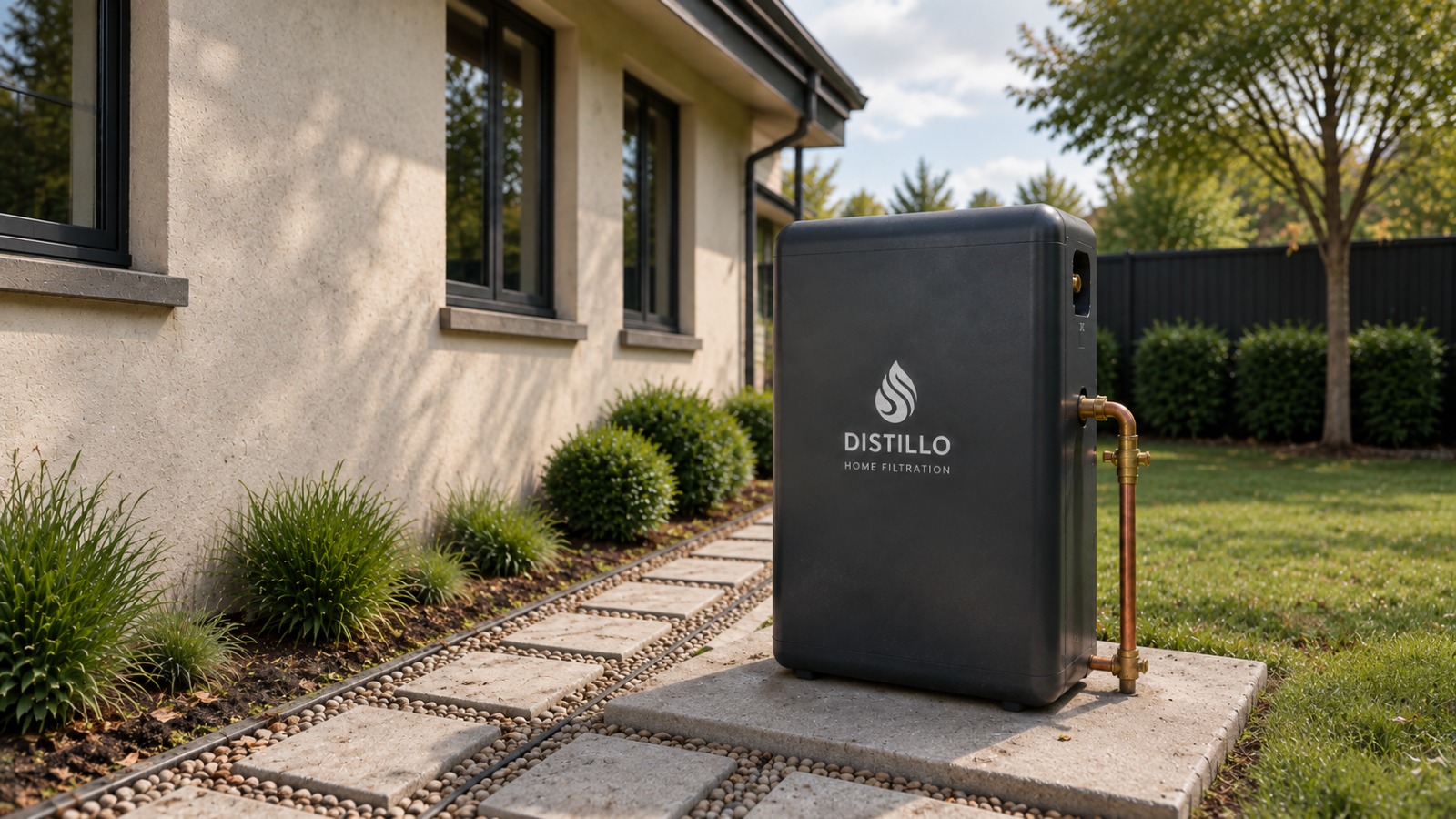
Everything you need to know about bringing whole home filtration to your Melbourne home.
First, confirm your Distillo RO system and identify the filtration stage that requires replacement. The cartridge or membrane needs to be compatible with the system. Checking these details before ordering filters for reverse osmosis system maintenance can help avoid compatibility issues and ensure you receive the appropriate replacement component.