
Sediment and Suspended Solids
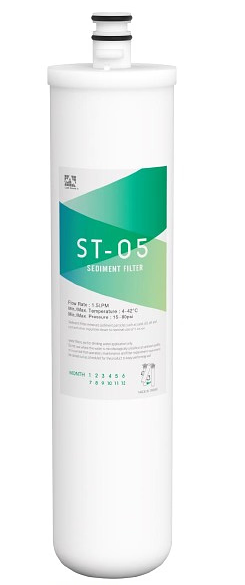
The first stage helps remove sand, silt, dirt, rust and other suspended particles before the water reaches the carbon filters.
The water coming from your tap may look perfectly clear, but that does not tell you everything about what is dissolved in it. Depending on the source and local water conditions, tap water can contain sediment, chlorine, dissolved solids and other substances that affect its taste, odour and overall quality.
Distillo’s five-stage reverse osmosis water filtration system is designed for households wanting a more comprehensive filtration process for drinking and cooking water. It combines sediment and carbon filtration with an RO membrane before passing the water through a final post-carbon and mineral stage. The result is dedicated filtered water delivered through a separate tap, without taking up unnecessary space in your kitchen.
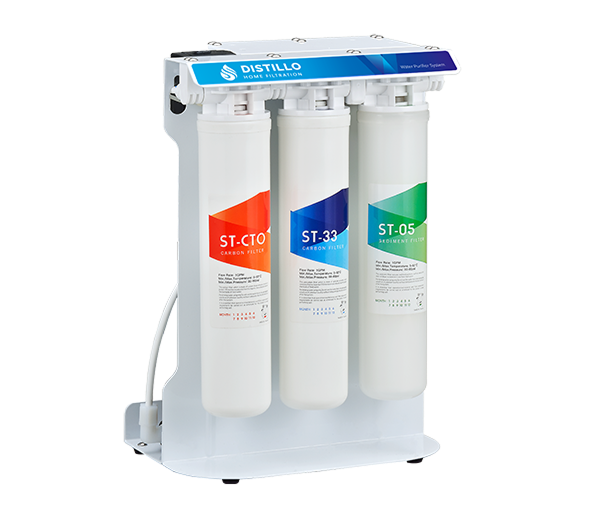
Rather than asking one filter to do everything, the Distillo system uses five stages, with each stage performing a specific role.
The first stage helps remove sand, silt, dirt, rust and other suspended particles before the water reaches the carbon filters.
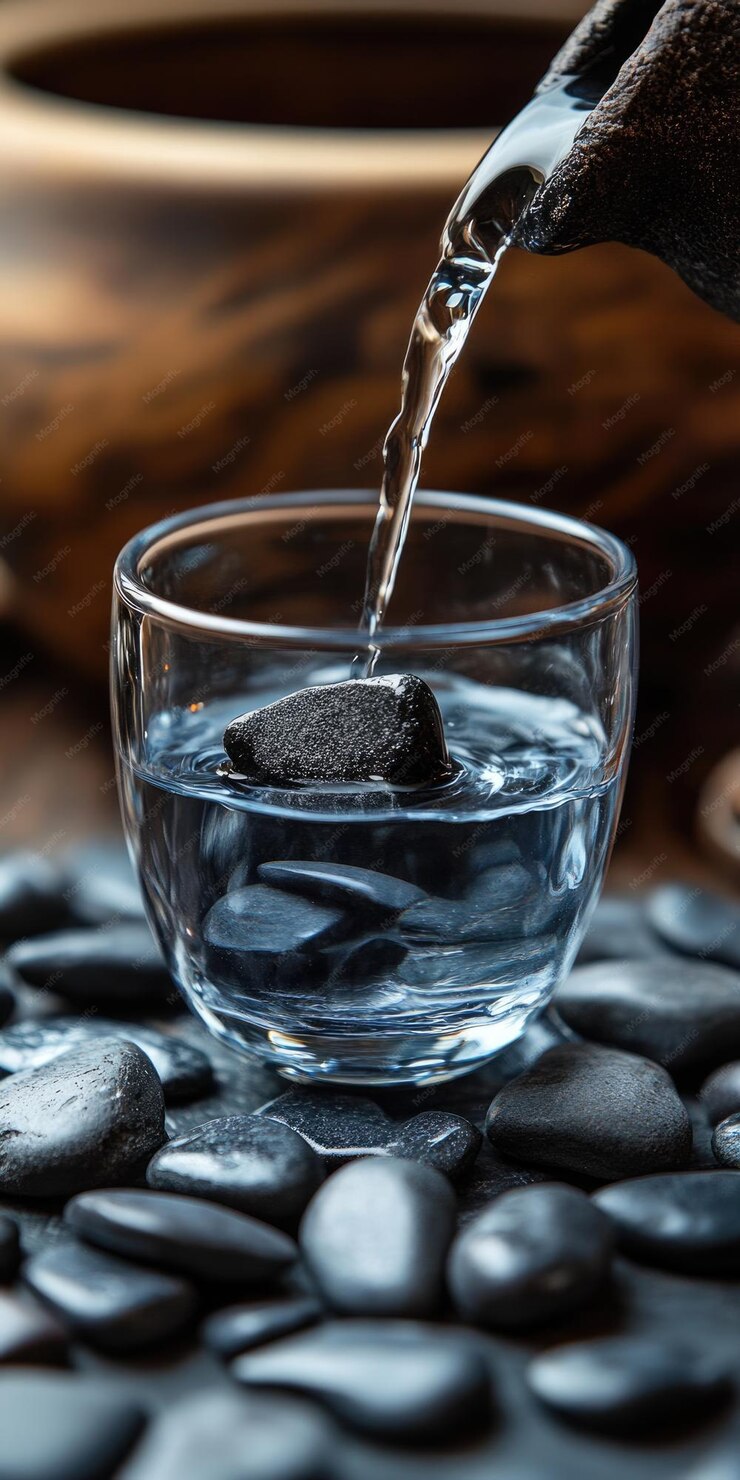
Granular activated carbon helps reduce chlorine, odour and certain chemicals that can affect the taste and smell of tap water.
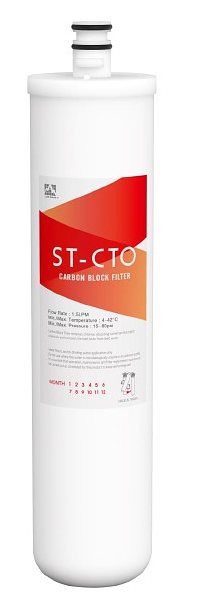
The carbon block provides another filtration stage for reducing chlorine, odour and certain chemicals before the water reaches the RO membrane.
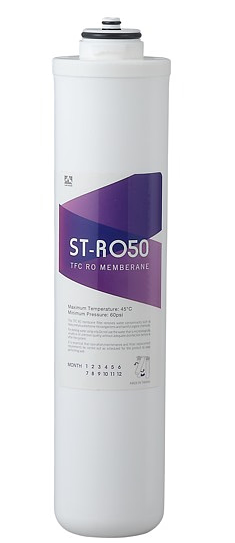
The ST-RO50 membrane is the central stage of the system and is designed to remove up to 95% of total dissolved solids (TDS) from the source water.
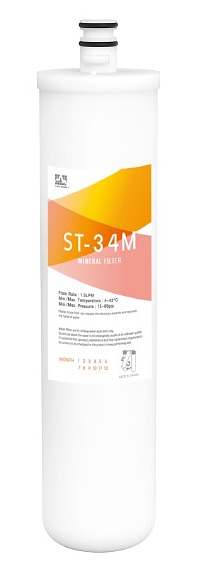
The final stage helps improve the taste of the filtered water while adding essential minerals.
Together, these stages provide a more thorough filtration process than relying on a single carbon or sediment cartridge.
A standard carbon filter and an RO system do not perform exactly the same job. Carbon filtration is useful for reducing chlorine, taste and odour, while the RO membrane is designed to address dissolved solids as part of a more intensive filtration process.
This is why reverse osmosis water filtration is commonly considered when the goal is to treat dedicated drinking and cooking water rather than simply improve the taste of water at one outlet.
The Distillo system is designed around this point-of-use approach. Water passes through the five stages before reaching the dedicated filtered tap, giving you a separate source for drinking and food preparation.
The Distillo system is designed to sit beneath the kitchen bench, keeping the main filtration equipment out of sight while providing filtered water through its own faucet.
For homeowners comparing a reverse osmosis filter for home, the practical details matter just as much as the filtration stages. The system uses 10-inch quick-change filters and an NSF-approved 4.8-gallon storage tank. The standard RO membrane provides 50 GPD, equivalent to approximately 189 litres per day, with 75 GPD and 100 GPD options also available.
The system operates with a 100–240V AC input and 24V DC output. Its compact configuration makes it suitable for households that want dedicated filtered water without installing a large filtration unit throughout the property.
provide a clear progression from sediment and carbon filtration through to RO and final taste treatment.
is provided by the ST-RO50 membrane under the specified conditions.
make routine filter replacement straightforward.
keeps filtered drinking and cooking water separate from the regular household supply.
helps improve taste after the RO stage.
provides stored filtered water for household use.
provides an important consideration for Australian households selecting a filtration product.
The process is straightforward. Incoming tap water first passes through the sediment filter, followed by two carbon stages. These pre-filtration stages prepare the water before it reaches the RO membrane.
The membrane then provides the system’s more intensive filtration stage, reducing dissolved solids and other substances. After this stage, the water passes through the post-carbon and mineral filter before being stored in the pressure tank and delivered through the dedicated tap.
This is the basic journey:
Tap water
Sediment
GAC Carbon
CTO Carbon
RO Membrane
Post Carbon & Mineral
Filtered Tap
Tap water
Sediment
GAC Carbon
CTO Carbon
RO Membrane
Post Carbon & Mineral
Filtered Tap
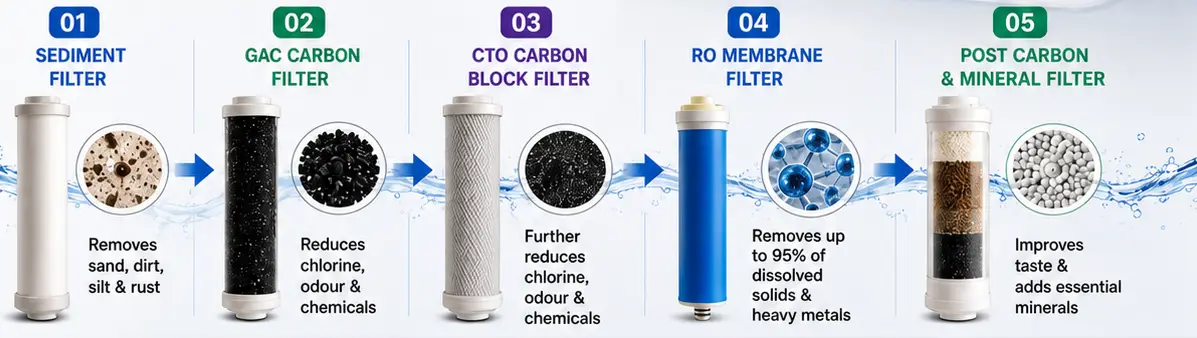
The result is a dedicated drinking-water supply that has gone through five separate filtration stages.
It is easy to assume that every filtration system is designed to treat the entire household supply, but that is not the case. Distillo’s RO system is a point-of-use solution designed primarily for drinking and cooking, while its whole-home filtration system treats water at the point where it enters the property.
For example, a whole house water reverse osmosis installation would be a very different configuration from Distillo’s dedicated under-sink RO system. Likewise, a whole house reverse osmosis filtration system is not the same as the Distillo whole-home filtration product.
Distillo’s whole-home system is designed to provide filtration across multiple household outlets, while RO is intended for more intensive filtration at a dedicated drinking-water outlet. Choosing between them therefore comes down to where you want filtration and what you want the system to achieve.
| Feature | Distillo RO System | Distillo Whole-Home Filtration |
|---|---|---|
| Installation | Point-of-use | Point-of-entry |
| Main use | Drinking and cooking | Water throughout the home |
| RO membrane | Yes | No |
| Coverage | Dedicated filtered tap | Multiple household outlets |
| Filtration | Five-stage RO | Whole-home filtration |
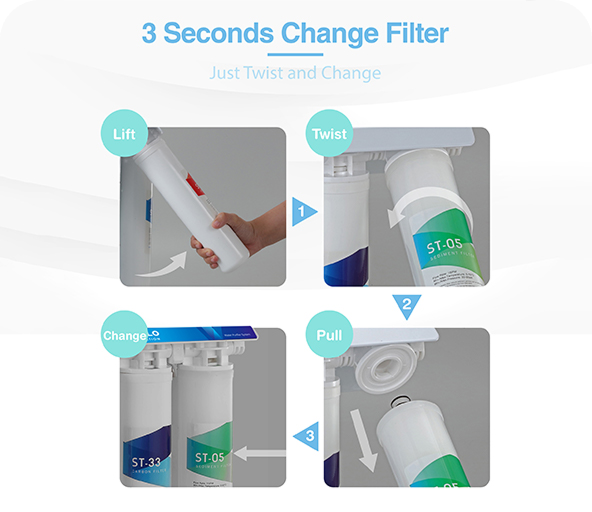
Filter maintenance should not become a complicated part of owning a water filtration system. Distillo’s cartridges are designed for quick replacement using a simple lift, twist, change and pull process.
The GAC, CTO and sediment filters generally have shorter service lives than the RO membrane. The supplied product information gives approximately six months for the carbon filters, around 3–6 months for the ST-05 sediment filter and approximately 12 months for the post-carbon/mineral filter, depending on water quality and usage. The ST-RO50 membrane has an approximate service life of 24–36 months.
A reverse osmosis home system should still be maintained according to its individual filter requirements rather than waiting until water quality noticeably changes.
If you are comparing a water treatment reverse osmosis solution, look beyond the number of stages. Consider the type of water being treated, how much filtered water your household uses, where the system will be installed and how straightforward filter replacement will be.
Distillo’s standard 50 GPD configuration produces approximately 189 litres per day, with higher-capacity 75 GPD and 100 GPD options available. That gives households some flexibility when choosing a system based on their expected usage.
A whole house reverse osmosis system may sound like the obvious choice when searching for maximum coverage, but it is important to distinguish that from Distillo’s product. The Distillo RO system is designed as a dedicated drinking-water solution, while the whole-home product is intended for filtration throughout the property.
Contact us or Call us on 1300 541 644.
Everything you need to know about bringing whole home filtration to your Melbourne home.
A reverse osmosis water filter system combines sediment and carbon pre-filtration with an RO membrane and final post-carbon/mineral filtration. Carbon filters primarily address substances such as chlorine, taste and odour, while the RO membrane is designed to reduce dissolved solids.
Distillo’s RO product is a point-of-use system for drinking and cooking water. If you are looking for a whole house reverse osmosis water filter, it is worth first considering whether you need filtration at every outlet or dedicated RO filtration at your kitchen tap.
The reverse osmosis membrane water filter is the fourth stage in Distillo’s five-stage system. The ST-RO50 membrane is designed to remove up to 95% of TDS from source water.
The ST-RO50 membrane has an approximate service life of 24–36 months. Actual replacement requirements can vary according to feed-water quality and household usage.
The system is designed around a dedicated filtered tap, giving households a separate outlet for drinking and cooking water. This is different from a reverse osmosis system water filter designed as part of a whole-property configuration.
When comparing a water filter for reverse osmosis, consider its filtration stages, membrane capacity, storage tank, replacement requirements and available installation space. Distillo’s system uses a 4.8-gallon NSF-approved storage tank and offers 50, 75 and 100 GPD membrane capacities.
A whole home ro water filtration system Victoria search may bring up systems designed for property-wide RO treatment, but this is different from Distillo’s five-stage point-of-use product. Distillo’s RO system is intended for dedicated drinking and cooking water, while its separate whole-home system provides point-of-entry filtration.
A reverse osmosis home water filter system is generally focused on producing more intensively filtered water at a dedicated outlet. Distillo’s whole-home filtration system instead treats water as it enters the property, supplying filtered water throughout the home.